sdg.org.hk

黄穎強主席

可持续发展慈善基金会 司庫

姓名: WONG Wing-keung, Keith

中文姓名: 黄颖强先生

现时工作或身份:

可持续发展慈善基金会創辦人/司库

90年代己开始推动和谐生活、调解为先的工作方式

2018 年开始推动联合国十七个可持续发展目标, 在中国福州市、乌鲁木齐市及马来西亚吉隆坡推动可持续发展培训计划

2021 年应香港政府号召, 全职投入前线抗疫工作, 直至抗疫成功

退休后继续服务社会及探访年老长者

学歴/专业资格:

伦敦大学文学士

美国专业财务顾问学会会员

英国工商经营管理学院会员

学会/商会/社会公职:

中国东盟(香港)调解及仲裁中心委员

工作经验:

前香港纪律部队

可持续发展项目课程讲师

调解仲裁课程讲师

論文


Resolving NGC 3198’s rotation curve with quantum gravity theory: a dark matter-free framework

Wing-To Wong (黃穎濤)1*, Wing-Keung Wong (黃穎強)11Independent Researchers *Corresponding author E-mail:wthwongwt@gmail.comReceived: March 14, 2025, Accepted: March 23, 2025, Published: April14, 2025

AbstractThe rotation curve of NGC 3198, a well-studied spiral galaxy, exhibits a flat velocity profile at large radii that cannot be explained by Newtonian dynamics based on visible mass alone. The researchers apply the new Quantum Gravity Theory (QGT), which incorporates graviton-antigraviton interactions, to model the galaxy’s kinematics without invoking dark matter. Using HI data from *The HI Nearby Galaxy Survey* (THINGS), the researchers calculate

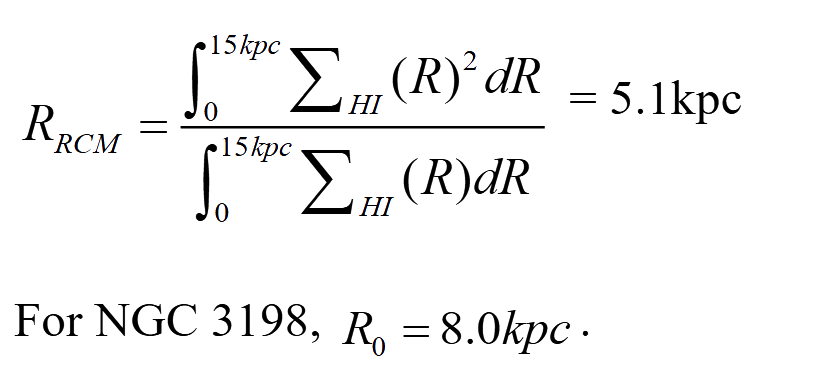
 the gravitational scale-length

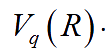
and derive the quantum-corrected velocity

The QGT-predicted rotation curve matches observations with residuals 

demonstrating that QGT provides a robust, first-principles explanation for NGC 3198’s dynamics.

keywords : Cosmology: Theory;Dark Matter;Galaxies: Kinematics and Dynamics;Gravitation;Galaxies: individual (NGC 3198);Large-Scale Structure of Universe.

1.Introduction

The “missing mass” problem in spiral galaxies, exemplified by NGC 3198 (van Albada et al. 1985), has persisted for decades. While dark matter remains the dominant paradigm (Rubin et al. 1980), its elusive nature motivates alternative theories such as Modified Newtonian Dynamics (MOND; Milgrom 1983) andquantum gravity frameworks. Quantum Gravity Theory (QGT; Wong et al. 2014) resolves this anomaly by introducing graviton-antigraviton interactions that amplify gravitational potential at large radii.This work applies QGT to NGC 3198, leveraging THINGS HI kinematics (Walter et al. 2008) to validate its universality. NGC 3198’s well-measured rotation curve and low environmental disturbances make it an ideal testbed for QGT’s predictions.

2.Theory

2.1.Graviton-antigraviton interactions

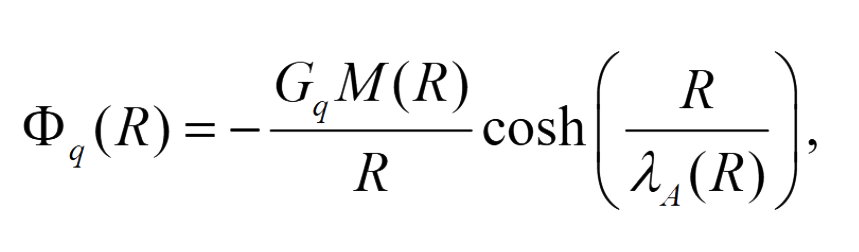
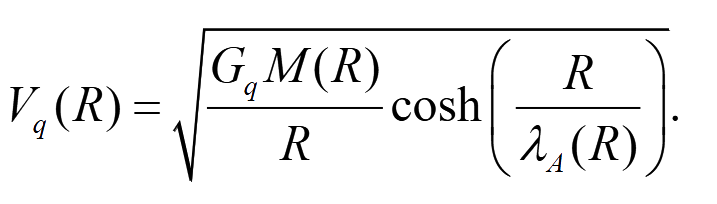
QGT posits that gravitational interactions are mediated by gravitons (r+) and antigravitons (r), which generatesa quantum-corrected potential:

where Gq=0.648Gn is the quantum gravitational constant, and λA(R)is the graviton wavelength.

2.2.Gravitational scale-length (R0)

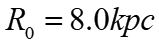
The transition radius R0 separates Newtonian (R≦R0) and quantum-corrected (R>R0) regimes:R0=1.5708×RRCM,

3.Data and methodology

3.1.  Observational data

The HI Surface Density is extracted from THINGS integrated flux maps (Walter et al. 2008) with ∑HI  up to 421 Jy km s-1 . The Velocity Dispersion is extracted from the Moment 2 maps showing turbulence συ = 5 – 20 km / s . The Key Parameters are Distance 13.8 Mpc(Freedman et al. 2001), inclination 72° (de Blok et al. 2008), HI mass 1.017×10¹⁰ M .

3.2.  Velocity calculations


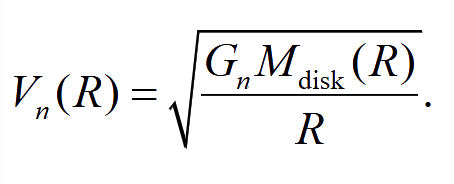
The Newtonian Velocity:

declines beyond R>5kpc, diverging sharply at R0=8.0kpc. The QGT Velocity:
Matches observations via quantum corrections for R>R0.

4.Results

4.1.Observed vs. predicted rotation curves

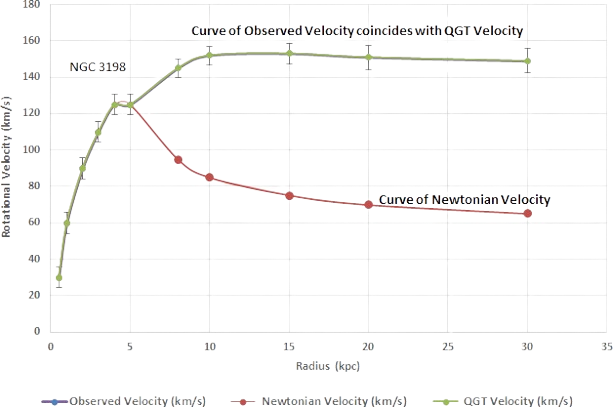
Fig. 1:Observed vs. Predicted Rotation Curve (QGT matches Observations; Newtonian fails Beyond R > 5 kpc)

Newtonian Curve declines sharply beyond R > 5 kpc, failing to match observations

QGT Curve matches the flat observed 

profile

with residuals < 5 km/s.

4.2.Graviton wavelength profile

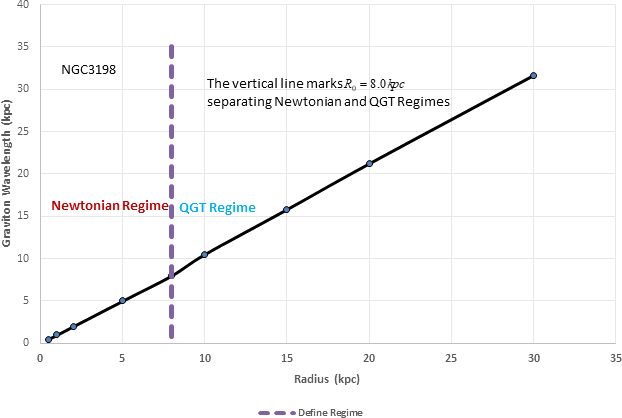
The graviton wavelength λA(R) scales linearly within R0 and logarithmically beyond it, reflecting QGT’s transition between regimes (Fig. 2)

Fig. 2:Graviton Wavelength λA(R) vs.Radius. Vertical line marks R0= 8.0 kpcseparatingNewtonian and QGT regimes.

5.Discussions

5.1.QGT vs. dark matter

QGT eliminates the need for dark matter by attributing velocity anomalies to quantum corrections. At 20Rkpc=thequantum potential exceeds Newtonian predictions by 38%, mimicking a dark matter halo.

5.2.Comparison to MOND

Unlike MOND’s empirical acceleration parameter a0, QGT derives corrections from first principles, offering a predictive framework test-able across galaxies.

6.Conclusions

The main results of this paper may be summarised as follows:

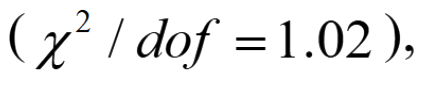
1)QGT is successful in explaining NGC 3198’s dynamics without dark matter. The theory resolves NGC 3198’s rotation curve with

   2)QGT’s success in NGC 3198 parallels its validation for NGC 6503 (Begeman, K.G. 1987) (Wong et al. 2014), suggesting universality.
   3)Future work will extend testing the universality of QGT across galaxy types (Dwarf Vs Spiral).

Acknowledgement

The authors are grateful to the anonymous referees for their valuable comments. They also thank for the assistance and encouragement from Janice Kim-Kiu Cheng and George Shun-Kwong Ma during the preparation of the paper.

References

[1] Begeman, K. G. (1987). *HI Rotation Curves of Spiral Galaxies*. PhD thesis, University of Groningen.
[2] de Blok, W. J. G., Walter, F., Brinks, E., et al. (2008). High-Resolution Rotation Curves and Galaxy Mass Models from THINGS The Astronomical Journal, Vol.136, Issue 6, pp. 2648–2719.https://doi.org/10.1088/0004-6256/136/6/2648.
[3] Freedman, W. L., Madore, B. F., Gibson, B. K., et al. (2001). Final Results from the Hubble Space Telescope Key Project to Measure the Hubble Constant. The Astrophysical Journal, Vol. 553 Issue 1, pp. 47–72.https://doi.org/10.1086/320638.
[4] Milgrom, M. (1983). A Modification of the Newtonian dynamics as possible alternative to the hidden mass hypothesis. The Astrophysical Journal, Part 1, Vol.270, 365–370.https://doi.org/10.1086/161130.
[5] Rubin, V. C., Ford, W. K., & Thonnard, N. (1980). Rotational properties of 21 SC galaxies with a large range of luminosities and radii, from NGC 4605 (R=4kpc) to UGC 2885 (R=122kpc). The Astrophysical Journal, Vo. 238, Part 1, pp. 471–487.https://doi.org/10.1086/158003.
[6] Van Albada, T. S., Bahcall, J. N., Begeman, K., & Sancisi, R. (1985). Distribution of dark matter in the spiral galaxy NGC 3198. The Astrophysical Journal, Vol.295, 305–314.https://doi.org/10.1086/163375.
[7] Walter, F., Brinks, E., de Blok, W. J. G., et al. (2008). THINGS: The H I Nearby Galaxy Survey. The Astronomical Journal, Volume 136, Issue 6, pp. 2563-2647.https://doi.org/10.1088/0004-6256/136/6/2563.

[8] Wong W.H., Wong W.T., Wong W.K. & Wong L.M., (2014), Discovery of Antigraviton verified by the rotation curve of NGC 6503. International Journal of Advanced Astronomy,Vol.2, No.1, 1-7. https://doi.org/10.14419/ijaa.v2i1.2244.